Sunday, June 30, 2024

Sunday, August 4, 2019
Suction Aeration Deters Insect Pests

Recent studies have examined whether it’s better to direct air from above or below as a means of using temperatures of 60 degrees Fahrenheit or below to control insects.
USDA scientists experimented with storage bins whose grain masses were cooled with either pressure aeration or suction aeration. Pressure aeration uses fans to push ambient air from the bottom of the bin upwards, while suction aeration involves reversing the fans to pull air from the top downward.
They conducted two eight-month trials using six metal storage bins with perforated floors and grain storage capacities of 1,250 bushels of wheat. Stored insects examined in the study were rusty grain beetles, foreign grain beetles, hairy fungus beetles, red flour beetles, saw-toothed grain beetles, rice weevils and lesser grain borers.
The data showed that, during the summer, suction aeration cooled the stored wheat’s upper portion, or “surface zone,” more quickly than pressure aeration, and that the difference correlated to fewer insect pests. For example, in pressure aeration-cooled bins, 3,290 rusty grain beetles and 8,210 red flour beetles were found in surface-zone traps, versus 662 and 722 respectively in suction aeration-treated bins.
Suction aeration’s rapid cooling of the grain’s surface zone is advantageous because that’s where insects initially infest the grain after flying in from outside. This can reduce reliance on the fumigant phosphine to control insects.
Source:
Applied Engineering and Agriculture; Agricultural Research Service, USDA
Farm Supply
Farm Magazines
Pest Control
Artwork: Grain Storage Bin Print
Sunday, July 14, 2019
Planting Green in a Wet Spring

The approach — known as planting green — could help no-till farmers counter a range of problems like soil erosion, nutrient losses, soils holding too much moisture and causing a delay in the planting of main crops, and main-crop damage from slugs.
With climate change bringing more extreme precipitation events and an increase in total precipitation, no-till farmers need a way of dealing with wet springs. Penn State researchers conducted a three-year study of planting green to see if farmers could get more out of their cover crops by letting them grow longer in the spring.
As cover crops continue to grow, they draw moisture from the soil, creating desired drier conditions in wet springs for planting corn and soybeans. With planting green, after those main crops are planted into the cover crops, the cover crops are typically terminated by farmers with an herbicide. The decomposing cover crop residues then preserve soil moisture for the corn and soybean crops through the growing season.
During the study at five sites, researchers compared the results of planting green to the traditional practice of terminating cover crops 10 days to two weeks before planting the main crops of corn and soybeans.Cover crops included in the study were primarily rye and triticale, as well as a mixture of triticale, Austrian winter pea, hairy vetch and radish in one location.
Findings were mixed. Planting green appeared to benefit soybean crops more than corn. Cover crop biomass increased by 94 percent in corn and by 94 to 181 percent in soybeans. However, because planting green results in more cover crop residues acting as mulch on the surface, it also cooled soils from 1.3 to 4.3 degrees Fahrenheit at planting.
At several of the sites during the study years, main-crop plant populations were reduced when planted green, possibly due to the cooler temperatures slowing crop emergence and nutrient cycling, and/or from cover crop residue interference with the planter. In corn, crop damage by slugs also increased when corn was planted green.
No-till farmers struggle with slugs damaging corn and soybean seeds and seedlings because no-till doesn't disturb the soil and kill slugs or bury their eggs the way tillage does. No-till with cover crop residues also provides habitat for some crop pests and keeps the soil moist — so no-till cover crop systems tend to be great slug habitat.
Researchers had hoped that letting cover crops grow longer in the spring would supply alternative forage for the slugs, as well as habitat for slug predators such as beetles — and these factors would reduce slug damage of the main crop seedlings. But they did not see a consistent reduction in slug
damage on main crops.
When researchers compared crop-yield stability between the two cover crop termination times across the multiple locations and years, corn yield was less stable and reduced by planting green in high-yielding environments; soybean yield was not influenced by planting green.
They concluded that corn was more vulnerable to yield losses from conditions created by planting green than soybeans. Since soybean yield was stable across all locations, and not affected by cover crop termination date, they suggest that growers who want to extend cover crop benefits and avoid the risk of crop-yield reduction from planting green should consider trying it first with soybean.
Source:
Heather Karsten, associate professor of crop production ecology, Penn State College of Agricultural
Artwork: Buckwheat Cover Crop Seed
Friday, January 11, 2019
Frost Seeding
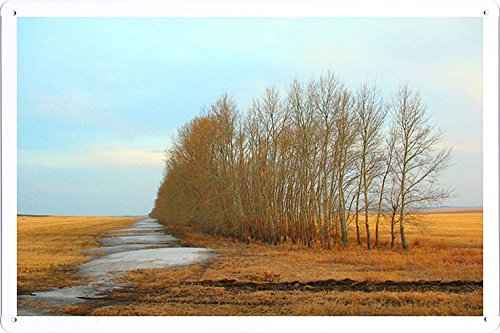
Frost seeding involves broadcasting a grass or legume seed over a pasture and letting the natural freeze/thaw cycles of late winter and early spring move the seed into good contact with the soil.
The best time to frost seed is usually from mid-February to the end of March.
Continued in Frost Seeding...
Farm Supply
Home Grown
Artwork: Spring Seeding
Wednesday, January 17, 2018
Choosing Cellulosic Biofuel Crops

A new multi-institution report backed by the U.S. Department of Energy and the Sun Grant Initiative provides practical agronomic data for five cellulosic feedstocks - switchgrass, Miscanthus, sorghum, energycane, and prairie mixtures - in long-term trials spanning a wide geographical area.
Crops were grown for five to seven years in multiple locations and with varying levels of nitrogen fertilizer. Although most of the crops are known to tolerate poor soil quality, the researchers found that they all benefited from at least some nitrogen. For example, Miscanthus did best with an application of 53.5 pounds per acre.
Due to shortages in plant materials, Miscanthus and energycane were grown on smaller plots than the other crops, but researchers say the new results are still valuable for producers.
Prairie mixtures, which were grown on land enrolled in the Conservation Reserve Program (CRP), also benefitted from added nitrogen. Yield kept increasing with the addition of up to 100 pounds per acre. But even though it increased yield, it is economically not profitable to use more than 50 pounds of nitrogen per acre.
And although most of the crops are somewhat drought-tolerant, precipitation made a difference.
The results showed the greatest yield potentials for lowland switchgrass varieties in the lower Mississippi valley and the Gulf coast states, whereas Miscanthus and prairie mixture yields are likely to be greatest in the upper Midwest.
Prairie mixtures, which are typically grown on CRP land to conserve soil, didn’t live up to their potential in the study.
Energycane could reach very high yields, but in a relatively limited portion of the country.
The crop that shows the highest potential yields in the greatest number of locations is sorghum. The annual crop is highly adaptable to various conditions and might be easier for farmers to work with. In terms of management, it is almost the same as corn. It germinates and grows so quickly, weed control is not a big issue. If you plant by early June, it will be 15-20 feet tall by September. It also has good drought tolerance.
Downsides to sorghum? It’s wet at harvest and can’t be stored. It also requires nitrogen and can lodge, or collapse, prior to harvest in wet or windy conditions.
Source:
“Biomass production of herbaceous energy crops in the United States: Field trial results and yield potential maps from the multiyear regional feedstock partnership”
Growth Spurts
Energy Farming
Plants and Seeds
Artwork: Sorghum vulgare
Thursday, January 11, 2018
Frost Seeding.
Frost seeding involves broadcasting a grass or legume seed over a pasture and letting the natural freeze/thaw cycles of late winter and early spring move the seed into good contact with the soil.
The best time to frost seed is usually from mid-February to the end of March.
Continued in... Frost Seeding
Home Grown
Farm Supply
Artwork: Spring Seeding
Monday, July 31, 2017
Grain Bin Maintenance

Your grain crop is a major investment that needs to be protected. Grain quality does not improve in storage. At best, the initial quality can only be maintained. If you take the extra time to make sure conditions are good for storing grain, then you are protecting that investment.
Proper storage begins with the condition of the harvested grain, including moisture level and how it leaves the combine and then is transported and handled.
continued in Grain Bin Maintenance
Farm Supply
Farm Magazines
Artwork: Grain Bin model 1/64 scale
Thursday, February 18, 2016
Weed Blasting
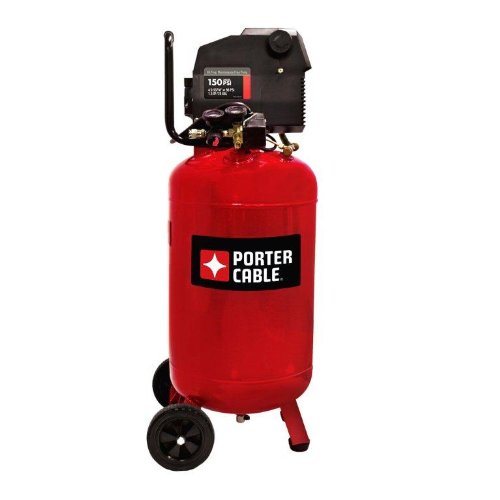
Weed blasting can reduce weed biomass in organic tomato and pepper crops by up to 97 percent, while maintaining crop yields similar to hand-weeded control plots.
Organic fertilizers, such as soybean meal, can be used as abrasive grit, which could mean farmers could control weeds and fertilize their crop in a single pass.
The method, recently field-tested at the University of Illinois, has been proven effective. In conjunction with plastic mulch, abrasive weeding reduced final weed biomass by 69 to 97 percent compared to non-weeded control plots.
During the study, grit was applied through a hand-held siphon-fed sand-blasting unit connected to a gas-powered air compressor, which was hauled down crop rows with a walk-behind tractor. A number of grit sources were tested: walnut shells, granulated maize cob, greensand, and soybean meal. If applied at the right plant growth stage, the force of the abrasive grit severely damages stems and leaves of weed seedlings.
No significant differences were fund between the grit types in terms of efficacy.
Plots with plastic mulch and one or more blasting treatment achieved the same fruit yields seen in hand-weeded plots, and 33 to 44 percent greater yields than in non-weeded control plots.
According to the study, weed blasting does affect some weeds more than others. Essentially, the smaller the seedling, the better. Also, seedlings whose growing points are aboveground (annual broadleaf species) are more susceptible to blasting than seedlings whose growing tips are located below ground (grasses and broadleaf perennials).
Source: Samuel Wortman, University of Illinois.
Organics
Farm Supply
Artwork: Portable Air Compressor
Wednesday, November 4, 2015
Maple Syrup Migrating

Currently, the best times to tap maple trees are within an eight-week window from late winter to early spring when temperatures cause freezing at night and thawing by day. By 2100, Northeast producers can expect to begin tapping maples closer to Christmas.
Sap flow is related to pressure changes in the trees' xylem, which are tubes beneath the bark that carry sap from the maple's roots up to the leaves. As maple trees freeze in winter, gases are pushed out of the xylem into surrounding tissues, and negative pressure is created within the xylem compared with atmospheric pressure. When the trees thaw, the gases expand and dissolve back into the sap, creating positive pressure. When tapped, the sap flows out because the pressure inside the xylem is greater than outside.
Based on this principle, researchers identified that the best days for sap flow are when diurnal temperatures swing at least a few degrees below freezing at night to a few degrees above freezing by day.
They scaled down global climate computer models to regional scales to determine daily temperatures for 10,000 locations across the sugar maple's range -- from North Carolina to Quebec to Minnesota, with optimal production areas in the Northeast and Quebec -- from 1970 to 2100. In this way, the researchers could identify daily minimum and maximum temperatures during optimal eight-week windows for tapping sugar maples.
By "backcasting," they validated their models with temperature data, which revealed that start dates for tapping maples in the Northeast are about a week earlier than in 1970.
Under a high carbon dioxide emissions computer model scenario, syrup production will decline slightly in the Northeast, mostly after 2030. According to the study, by 2100, the average number of flow days will stay constant in Saranac, N.Y.; decline by about two days in State College, Pa.; five days in Montpelier, Vt.; and by 10 days in Jackman, Maine. In a more moderate emissions scenario, producers will lose about half as many days in each location. Similarly, in the high emissions scenario, start dates for tapping maples will be earlier by about a month between now and 2100: In Jackman, the current optimal start date of March 11 shifted to early February; in Saranac and Montpelier, the current start date of March 1 moved ahead to Feb. 1; and in State College and Ithaca, N.Y., start dates advanced to mid-January from mid-February.
Maple syrup production south of Pennsylvania will likely be lost by 2100 due to lack of freezing, while production in Quebec may benefit from climate changes.
Sources:
Brian Chabot, professor of ecology and evolutionary biology, Cornell University
Outgoing: Tapping at Kripplebush
Syrup
Out There: Serious Climate Changes Looming Closer
Artwork: Collecting Of Sap From Maple Trees
Thursday, October 1, 2015
Tar Spot Appears in the Midwest
This corn disease is not only new to Indiana and Illinois, where it was first reported, but its appearance is a first in the U.S., according to Pierce Paul, a corn and small grain Extension specialist with the College of Food, Agricultural, and Environmental Sciences at The Ohio State University. It may have been transported to the Midwest earlier this season by Tropical Storm Bill.
“We don’t want to cause a panic, but we do want to raise awareness of the issue and let growers know that this disease is out there,” Paul said.
Tar spot begins as oval to irregular bleached to brown lesions on leaves in which black spore-producing structures are formed. Affected areas of the leaf will have a rough or bumpy feel to the touch. Signs of tar spot can also appear on leaf sheaths and husks.
“Because tar spot is generally considered a tropical disease, it’s unlikely that the fungus will survive the harsh Midwest winter to become established here,” Paul said. “We’ll just have to wait and see and do more research on the disease in the Midwest.”
While most corn growers are either harvesting corn now or their crops are in the drying down stage, the disease is still detectable on dry, senescent leaves, he said. Growers who suspect they’ve found it in their fields can send samples to Pierce Paul at OARDC, 1680 Madison Ave., Wooster, OH 44691, to have the samples lab tested to determine which fungus — Phyllachora maydis or Monographella maydis — may be present.
“At this point, only P. maydis-infected plants have been found,” he said. “Both fungi would have to be found before substantial yield loss occurs.
“Growers who find tar spot in their fields may want to take note of the hybrid they’ve used this year and avoid using that same hybrid next year just in case the fungus survives the winter.”
Source: Ohio State University Extension
Plants and Seeds
Farm Supply
Covert Art: Compendium of Corn Diseases
Monday, February 16, 2015
Cover Crop Grazing No Problem.
 Cover crops reduce soil erosion, boost organic matter, keep moisture in soil and sequester carbon in the soil so less of it is released as a greenhouse gas.
Conventional wisdom holds that if cattle were allowed to graze on cover crops they would eat up and remove the nitrogen and carbon otherwise left on the soil in the cover crop plant residue. Allowing cattle to tread on the soil also could compact it, preventing air and water from passing through the soil to reach plant roots.
Now, a 7-year study by Agricultural Research Service (ARS) ecologists has demonstrated that relatively low levels of grazing do not significantly affect the amount of organic matter in soil and do not compact the soil. It also showed that cover crops provided high quality forage and that the organic matter lost by allowing cattle to graze on cover crops was likely made up in the organic material supplied as manure. As in previous studies, they also found that no-till soils generally contained more carbon and nitrogen than conventional till soils.
The researchers grew winter or summer grains and used cover crops for both in the off-season. They also compared no-till versus tilling, and grazing versus no grazing. Cow/calf pairs were allowed to graze at a rate of one pair per 4 acres.
Source: Agricultural Research Service
HusbandryPlants and Seeds
Farm Supply
Artwork: Cattle Grazing
Monday, December 8, 2014
Memory in Plants

~ Friedrich Nietzsche
When we say that plants have memory it means that they have a past, "which they bear in their extended being and which they may access at any given moment," writes Michael Marder in Plant-Thinking. He gives two examples:
Barley leaves will unfurl if they are exposed to red light, so long as they contain calcium. If calcium is removed from the plant, the leaves will not unfurl. Yet, if the calcium is added a couple hours later, the plant will unfurl without the red light shining, "remembering" how it had shone earlier.
Plantlets of flax, likewise, respond to the stress of drought or wind by depleting calcium from their cells in a process that takes about a day, and yet they will continue to remember the traumatic event for up to a week as evidenced by their calcium depletion.
"These examples demonstrae that what Nietsche chanced upon in his reflection on the mimose is in fact a more general tendency of vegetal beings to store imageless and non-representational material memories in their cells, and so to retain a trace of the remembered thing iteslef, in place of its idealized projection," Marder concludes.
A Philosophy of Vegetal Life
by Michael Marder
Columbia University Press, 2013
Plants and SeedsPlant Roots: Growth, Function and Interactions with the Soil
Artwork: Magical Mimosa by Jessica Jenney
Monday, December 1, 2014
Less Fertilizer, More Nutrition.
 Giving too much phosphorus to wheat and barley plants has been shown to raise the amount stored as phytate, rather than as more digestible forms of phosphorus. This finding is important for two reasons:
* Livestock that are fed high-phytate grains excrete more phosphorus in their manure, which can pollute water.
* Phosphorus is a finite resource that could be irreplaceable once it has been thoroughly mined -- which could happen in the next 25 years.
The researchers found that soil phosphorus levels may affect grain phytate levels as much as plant breeding can, offering two complementary solutions to the nutritional and environmental problems caused by high phytate levels in grains. Besides being more environmentally sound, getting the application rate for phosphorus fertilizers just right might improve the nutrients delivered by grain crops such as wheat and barley.
Not only is the phosphorus in low-phytate grain crops more digestible by people, but low-phytate grains free up minerals essential to human nutrition: zinc, manganese and iron.
Source: Agricultural Research Service
Fertilizer
Farm Supply
Growing Guides
Tuesday, September 30, 2014
Down South, Apply Poultry Litter in Spring.
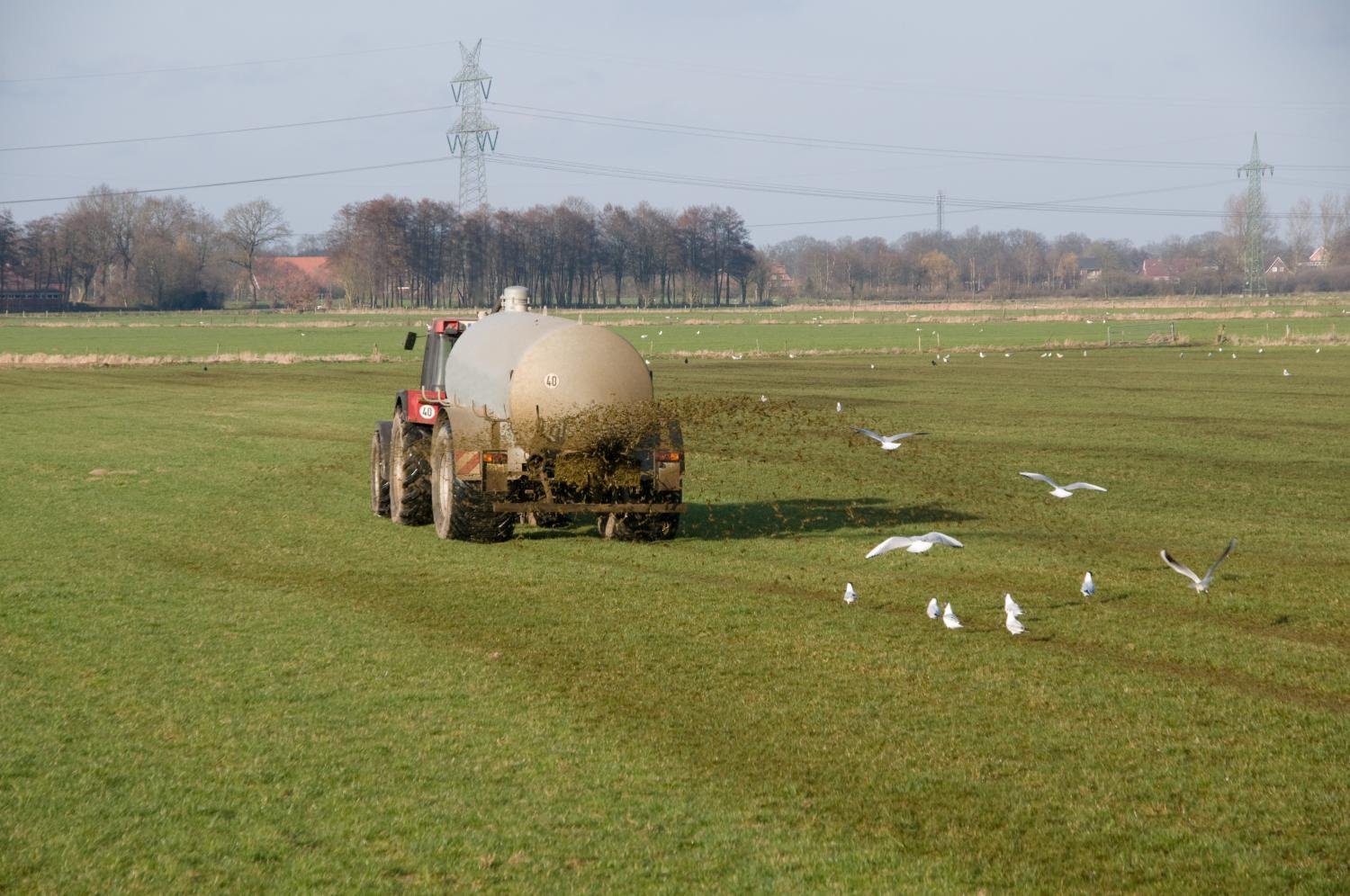 Poultry litter is a popular fertilizer in many southern states because that is where most of the U.S. broiler chickens are produced. The litter's nitrogen content boosts crop yields and saves on the expense of commercial fertilizers.
But farmers in Mississippi and other southern states are applying litter at the wrong time of time, according to a U.S. Department of Agriculture (USDA) agronomist.
Farmers in Mississippi often apply poultry litter in the fall, months before planting cash crops in the spring, because it's cheaper then and they have more time than in the spring, but Haile Tewolde at Mississippi State has found that spring is the optimal season for applying litter in the South and Southeast.
Tewolde and his colleagues applied poultry litter in the spring and fall to test plots of corn planted each April for three years. They applied the litter at two rates - four tons per acre and eight tons per acre - and incorporated it into the soil by "disking," a process that turns the soil and pulverizes it so that the litter blends in with the soil. For comparison, the researchers applied nitrogen fertilizer to other test plots in the spring and fall.
The results showed that over three years, yields were cumulatively higher in plots with litter applied in the spring than in the fall, regardless of the application rate. At the four-ton rate, spring-application yields were 16.7 percent higher, and at the eight-ton rate, they were 12.8 percent higher.
The results also showed that while using litter produced less corn than using fertilizer in the first year, those results were reversed in the second and third years. Higher yields in the second and third years were likely because nitrogen in the litter applied during the first year stayed in the soil and benefited crops in subsequent years.
Source: Agricultural Research Service
Plants and SeedsFarm Supply
Growing Guides
Artwork: Manure Spreading
Monday, August 4, 2014
Seed Saving For Species Preservation
 A new study has found that careful tailoring of seed collections to specific species and situations is critical to preserving plant diversity. Once seeds are saved, they can be reintroduced for planting in suitable locations if conditions are favorable.
In the study, researchers from the National Institute for Mathematical and Biological Synthesis and the University of Tennessee used simulation-based planning to make sampling recommendations, confirming that a uniform approach to seed sampling is ineffective.
First, collectors must choose their plant populations from a wide area rather than a restricted one. Sampling widely can capture up to nearly 200 percent more rare genes than restricted sampling. Collecting from about 25 maternal plants per population versus 50 plants appears to capture the vast majority of genetic variation.
The study also showed that collecting more than eight to ten seeds per plant leads to high overlap in genetic diversity and wasted effort.
Increasing concern over agriculture and food security and recognition of how fast biodiversity is disappearing has prompted seed banks to ramp up their collections. Botanic gardens that were once focused on showcasing plants now increasingly have a conservation mission as well, according to the study's lead author Sean Hoban.
"Our approach can be used to further refine seed collection guidelines, which could lead to much more efficient and effective collections, allowing us to preserve more diversity of the world's plants. These collections could benefit future ecosystem restoration projects as well as improve agricultural and forestry efforts."
Plants and Seeds
Farm Supply
Growing Guides
Artwork: Seed Bank
Monday, July 21, 2014
The Big Get Bigger, Whatever the Weather
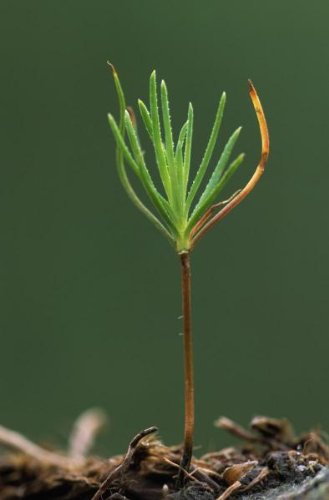 The size and age of plants has more of an impact on their productivity than temperature and precipitation, according to a landmark study by University of Arizona researchers.
A fundamental assumption in most ecosystem studies is that temperature and precipitation directly influence how fast plants can take up and use carbon dioxide. Warm and wet environments allow plant metabolism to run fast, while cold and drier environments slow down metabolism and lead to lower biomass production in ecosystems.
This assumption is mostly true, as countless experiments have demonstrated that temperature and water control how fast plants can grow. But when applied to an entire ecosystems, the assumption appears to be flawed.
To test the assumption on the scale of ecosystems, the researchers developed a mathematical model that analyzed data from more than 1,000 different forest locations across the world. The analysis revealed that plant size and plant age control most of the variation in which plants thrive, not temperature and precipitation as traditionally thought.
"This general relationship shows that climate doesn't influence productivity by changing the metabolic reaction rates underlying plant growth, but instead by determining how large plants can get and how long they can live for," said Sean Michaletz, lead author of the study.
"This means that plants in warm, wet environments can grow more because their larger size and longer growing season enable them to capture more resources, not because climate increases the speed of their metabolism."
Source: University of Arizona
Growth Spurts
Plants and Seeds
Farm Supply
Growing Guides
Artwork: Pine Sapling Sprouting
Tuesday, April 29, 2014
Delay Harvest to Increase Sweetpotato Yield
 Cultural practices such as early planting and delaying harvest are likely to increase yield and economic benefits for sweetpotato producers.
Field studies by researchers from Mississippi State and Louisiana State Universities show that yield increase was inconsistent with delaying harvest, and appears to depend on environmental conditions at harvest late in the season. Results also indicated that marketable yield of the sweetpotato cultivars was consistently greater in early plantings than late plantings.
Using economic assessments, the researchers determined that delaying harvest in early sweetpotato plantings showed a gain in net benefit for both hand harvesting for fresh market and field-run bulk harvesting for processing.
"Growers need to be cognizant of the market demands and adjust their practices accordingly to meet market expectations," the authors said. "Prices received by growers depend on the particular grade and market, and the difference in prices is a factor in the net benefit and marginal rate of return when delaying harvest."
The assessments also revealed that changing plant density resulted in no changes in economic benefit.
Sweetpotatoes are grown primarily for the fresh market, where consumers prefer medium-sized, uniformly shaped products that are free of imperfections. The sweetpotato processing industry, on the other hand, can use product of all sizes. For making sweetpotato fries, for example, large roots are preferred because they are longer and a more consistent fry length than medium-sized sweetpotatoes. Shape is not as critical as it is in the fresh market, and total yield is more important. Consequently, diverse production strategies are necessary to optimize returns.
Source: ASHS HortTechnology
Sweet Potatoes
Farm Supply
Farm Magazines
Growing Guides
Artwork: Sweet Potatoes Poster
Tuesday, December 3, 2013
Weeds Welcome Global Warming
 As temperature and carbon dioxide levels in the atmosphere increase, growers may see things pop up in their fields that they haven't seen before. Unfortunately, they won't all be good.
In a session on climate, carbon dioxide and invasive weed species at the University of Illinois AGMasters Conference, USDA-ARS crop systems specialist Lewis Ziska discussed how rising carbon dioxide levels and rising temperatures may cause invasive weed populations to change.
"Carbon dioxide provides the raw material needed for plants to grow, and as it increases, plant growth will be stimulated. Carbon dioxide is not a smart molecule -- it can't distinguish between crops and weeds. So with increased growth of crops comes increased growth of weeds as well."
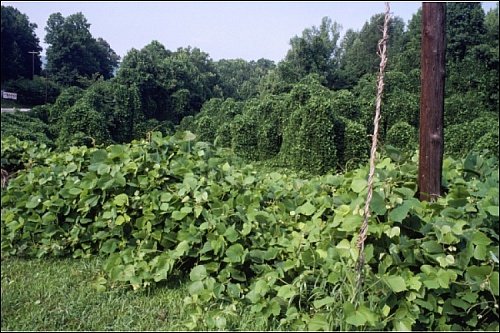
Ziska is studying how rising carbon dioxide and warmer temperatures alter the establishment and success of invasive and noxious weed species such as kudzu and Canada thistle. These weeds can result in widespread environmental or species degradation.
"In general, as temperature and carbon dioxide levels change, weeds may be more likely to adapt to these changes given their greater genetic variability relative to crops."
And as winter temperatures warm, kudzu, often referred to as "the vine that ate the South," is migrating northward. This could become problematic for the Midwest because kudzu is a carrier for Asian Soybean Rust and can serve as an alternative host for this pathogen.
On the positive side, Ziska said plant breeders can start selecting among crop lines for a greater yield response to carbon dioxide.
Source: Lewis Ziska, 301-504-6639
Growth Spurts
Farm Supply
Farm Magazines
Growing Guides
Photo: Kudzo Vine
Monday, October 28, 2013
Enough with the Potassium, Already!
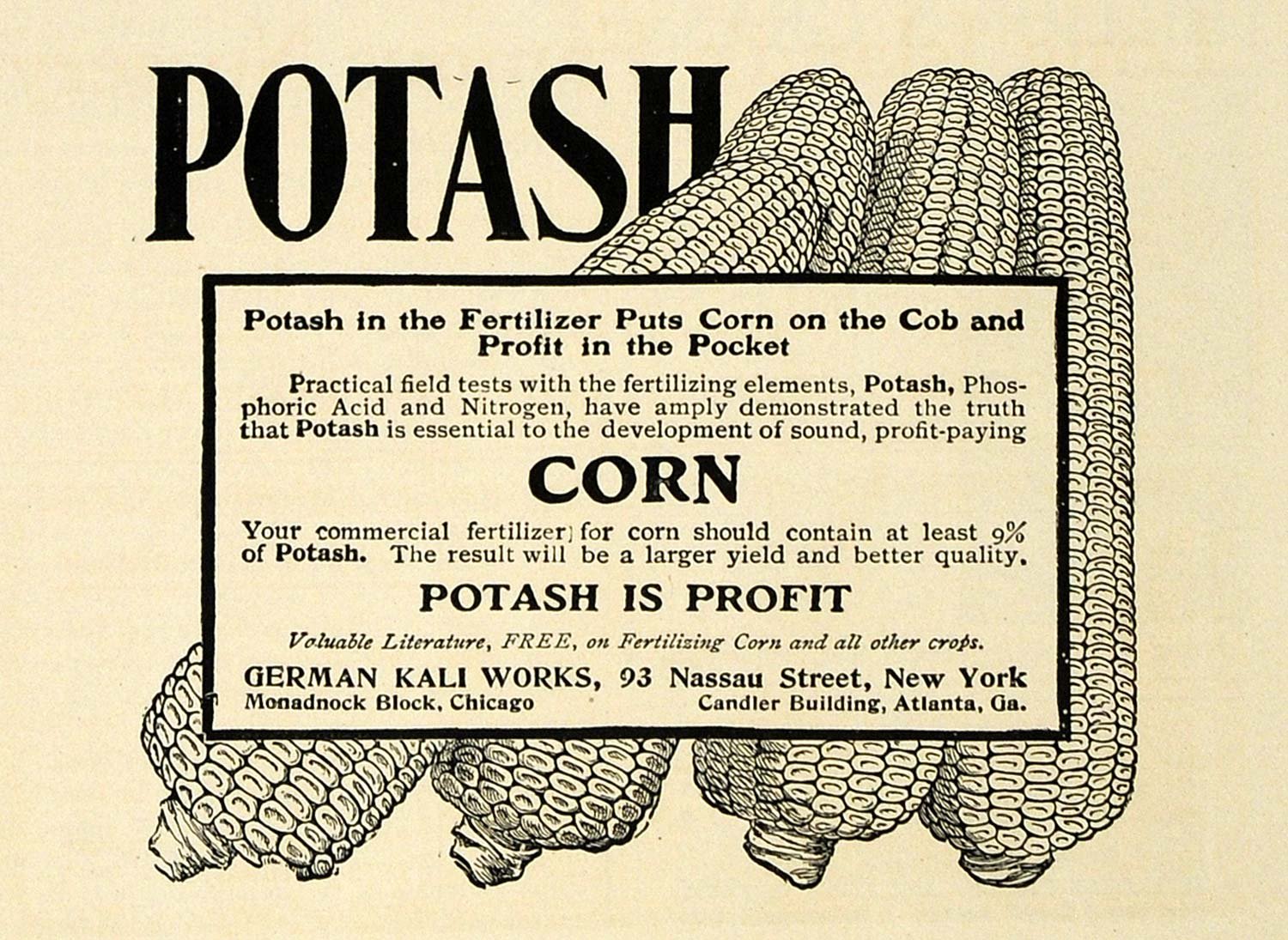 Since the chemical age of agriculture that began in the 1960s, potassium chloride (KCl) - a common salt known as potash - has been widely used as a major fertilizer in the Corn Belt.
Now, University of Illinois soil scientists are raising serious concerns with agriculture's 50-year potassium habit with research showing that testing soils for potassium is of no value for predicting its availability and that KCl fertilization seldom pays.
The findings came from a field study that involved four years of biweekly sampling for K testing with or without air-drying. Test values fluctuated drastically, did not differentiate soil K buildup from depletion, and increased even in the complete absence of K fertilization.
Explaining the increase, researcher Saeed Khan pointed out that for a 200-bushel corn crop, "about 46 pounds of potassium is removed in the grain, whereas the residues return 180 pounds of potassium to the soil—three times more than the next corn crop needs and all readily available."
Khan emphasized the overwhelming abundance of soil potassium, noting that soil test levels have increased over time where corn has been grown continuously. "In 1955 the K test was 216 pounds per acre for the check plot where no potassium has ever been added. In 2005, it was 360."
A similar trend has been seen throughout the world in numerous studies with soils under grain production.
KCl fertilization has long been promoted as a prerequisite for high nutritional value for food and feed. Yet, researchers have found that the qualitative effects were predominantly detrimental, based on a survey of more than 1,400 field trials reported in the scientific literature.
"Potassium depresses calcium and magnesium, which are beneficial minerals for any living system. This can lead to grass tetany or milk fever in livestock, but the problems don't stop there," Khan pointed out.
"Low-calcium diets can also trigger human diseases such as osteoporosis, rickets, and colon cancer. Another major health concern arises from the chloride in KCl, which mobilizes cadmium in the soil and promotes accumulation of this heavy metal in potato and cereal grain. This contaminates many common foods we eat—bread, potatoes, potato chips, French fries—and some we drink, such as beer. I'm reminded of a recent clinical study that links cadmium intake to an increased risk of breast cancer."
The Illinois researchers see no value in soil testing for exchangeable potassium and instead recommend that producers periodically carry out their own strip trials to evaluate whether potassium fertilization is needed. Based on published research cited in their paper, they prefer the use of potassium sulfate, not KCl.
Sources: University of Illinois College of Agricultural, Consumer and Environmental Sciences;
"The potassium paradox: Implications for soil fertility, crop production and human health" by Saeed Khan, Richard Mulvaney, and Timothy Ellsworth posted October 10, 2013 by Renewable Agriculture and Food Systems.
Farm Supply
Farm Magazines
Growing Guides
Artwork: 1909 Potash Print Ad
Monday, October 21, 2013
Waterhemp Becoming a Superweed
 Studying the first known case of waterhemp with resistance to HPPD-inhibiting herbicides such as Callisto, weed science researchers at the University of Illinois have identified two unique mechanisms in the plant that have allowed the weed to “get around” these herbicides.
“Waterhemp is very diverse, which you can see in the field. There are red plants, green plants, tall, short, bushy—basically a germplasm pool. If you keep spraying the same herbicide over and over, eventually you’re going to find that rare plant that can resist it,” said Dean Riechers, a U of I Professor of weed physiology,
What the U of I researchers find alarming is that waterhemp resisted the herbicide in much the same way that corn naturally resists HPPD-inhibiting herbicides.
“It mimics corn but also mimics the super bacteria that are resistant to all the antibiotics out there. Weeds are kind of like bacteria in that respect; at least this population is. Whatever active herbicide we throw on it, with the exception of glyphosate, it doesn’t work anymore,” Riechers said.
The study was prompted in 2009 when a continuous seed corn grower from central Illinois realized the HPPD-inhibiting herbicides he was using were no longer killing waterhemp plants, which by then had grown into a mat of weeds across the field.
“It became obvious to the grower that something was wrong, but it probably started years before that,” Riechers said, adding that the grower had been planting continuous seed corn every year, using HPPD-inhibiting herbicides for at least eight years in a row.
“Mesotrione and atrazine are normally two very good herbicides that are safe on corn but still kill waterhemp,” Riechers said.
Although the 2009 incident was the first to document this type of resistance, Riechers said four or five other locations in the Midwest have since reported similar occurrences.
 “It doesn’t appear to be isolated because it looks like there are other resistant populations coming up,” Riechers said. “The concerning thing is that some of these fields actually did have corn and soybean rotations. They weren’t just growing corn, they were rotating, which is what you’re supposed to do. But it still became HPPD resistant, and we’re not sure how that happened.”
Rong Ma, one of the researchers on the study, said growers should consider not using the same herbicide mode of action repeatedly. “For example, don’t use HPPD-inhibiting herbicides alone for several years in a row because it is then easier for weeds to develop resistance," she said
“Growers could also use tillage because there’s no resistance to tillage,” Riechers pointed out. “Farmers use no-till systems, often plant in narrow rows, and for the most part have gotten away from tillage for weed management. We have aided waterhemp in becoming a problem by not using tillage, using the same chemical over and over, and by not rotating crops.”
Source: Dean Riechers University of Illlinois, tel:+1 217-333-9655
Farm Supply
Farm Magazines
Growing Guides
Common Waterhemp Poster
Artwork: Waterhemp
Subscribe to:
Posts (Atom)